
A designer explains a space in minutes. A client takes days to understand it. That gap has always existed, but earlier it was easier to overlook. Now, when most decisions begin on a screen, it becomes visible almost immediately
According to the National Association of Realtors (2023), 97% of homebuyers say visuals are the most important factor when evaluating a property online. The implication is simple. If the visual is unclear, the decision slows down.
3D interior rendering for designers is a process of creating realistic visual representations of interior spaces before they are built. It helps designers present ideas clearly, reduce client confusion, and speed up approvals. In India, it is widely used in both residential and commercial projects to improve communication, enhance marketing, and support faster decision-making.
Most people think rendering is about beauty. It usually isn’t
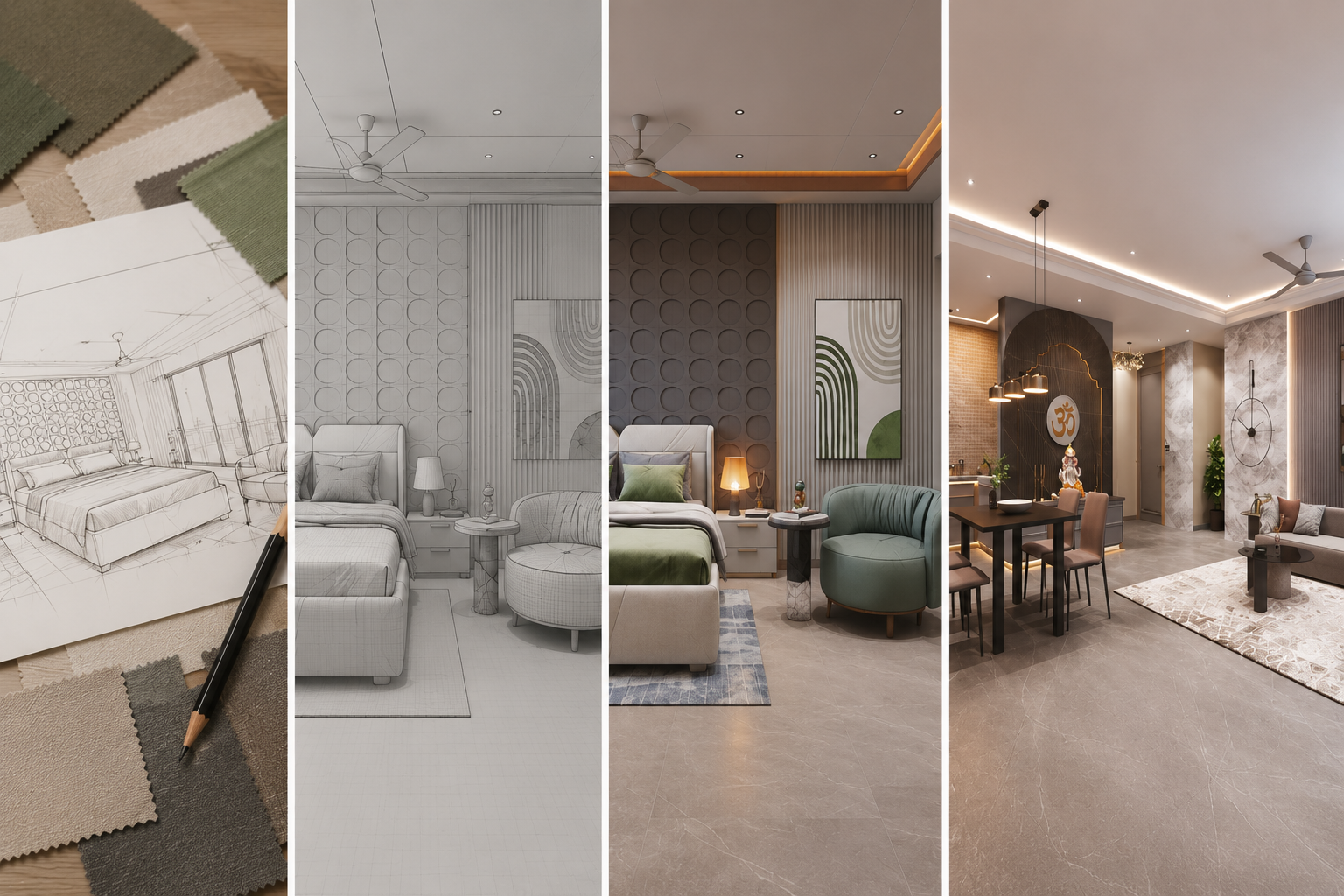
The assumption is predictable. Better visuals mean better design presentation.
What actually happens in most projects is slightly different.
Clients rarely reject a design because it looks bad on paper. They hesitate because they cannot fully imagine it. Plans, mood boards, and material samples require interpretation. Different people interpret the same design differently, especially in Indian residential projects where decisions usually involve multiple family members.
Most buyers do not struggle with design quality, they struggle with understanding what they are looking at.
In practical terms, a living room layout that feels obvious to a designer can feel uncertain to a client. Questions start appearing. Ceiling height. Lighting feel. Sofa proportions.
A render answers these without needing explanation. That changes the pace of the conversation.
What 3D interior rendering really does in a working project
In real projects, rendering shows up at very specific moments.
Early stage, it helps align direction. Mid stage, it reduces revision loops. In later stages, it starts functioning more as a sales tool
According to Zillow Consumer Housing Trends Report (2024), listings with high-quality visuals receive up to 2.5 times more engagement than those without. A similar pattern appears in designer-client discussions as well. Clear visuals keep conversations moving, while unclear ones create hesitation
There is a small detail many teams overlook. A render is not just a visual output. It is a decision tool.
At Lucid Artistry, the entire approach to interior rendering is built around how quickly someone can understand a space without needing a designer present to explain it. That shift, from presentation to clarity, tends to reduce back-and-forth more than expected.
Why designers rely on this more than they admit
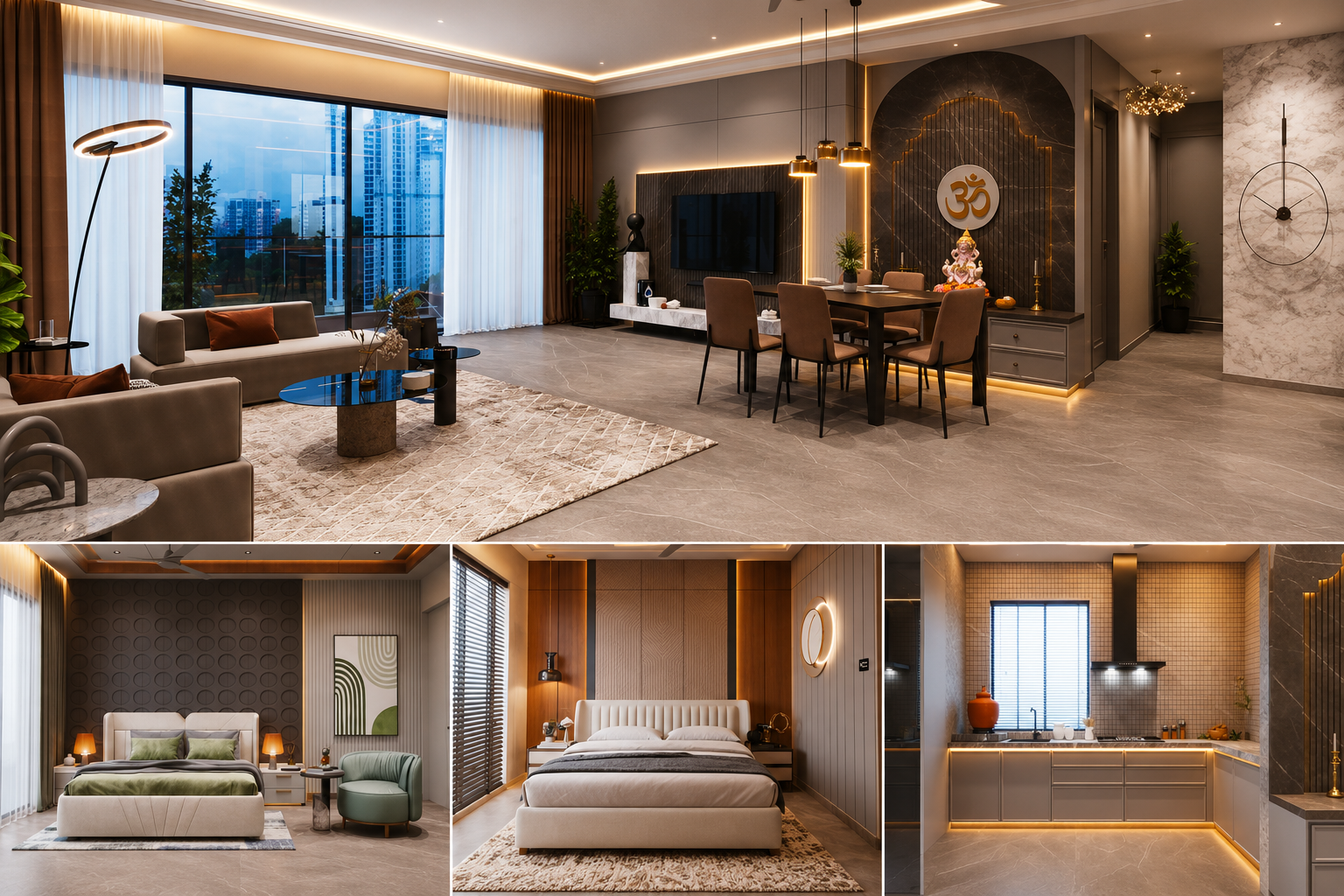
Designers often begin with sketches and references. Rendering enters when something is not landing clearly.
A client nodding during a presentation does not always mean agreement. Many times it means partial understanding. Real feedback usually comes later, often after clients discuss the project with family or partners.
According to JLL India (2023), over 65% of residential property buyers in India prefer projects that offer visual walkthroughs before site visits. The same mindset applies to interiors. People want to “see” before they commit.
There is also a practical pressure. Timelines.
A project that stretches because of repeated clarifications affects everything else. Contractors wait. Material decisions get delayed. Costs move.
Rendering compresses that uncertainty window.
Where this shows up beyond interiors
Interior rendering does not operate in isolation. It connects directly with how projects are marketed.
In commercial building 3d rendering India, developers use the same principle to communicate scale, usage, and experience. Office layouts, retail flow, hospitality ambience, all depend on how easily someone can visualise movement through space.
The same logic extends into real estate 3d walkthrough workflows. Walkthroughs simulate experience. Renders capture moments. Both serve different stages of decision-making.
According to Mordor Intelligence (2024), the architectural rendering market is growing at over 20% CAGR, largely driven by real estate demand. The demand is not for visuals alone. It is for clarity at scale.
Walkthrough vs rendering, the difference people feel but don’t define
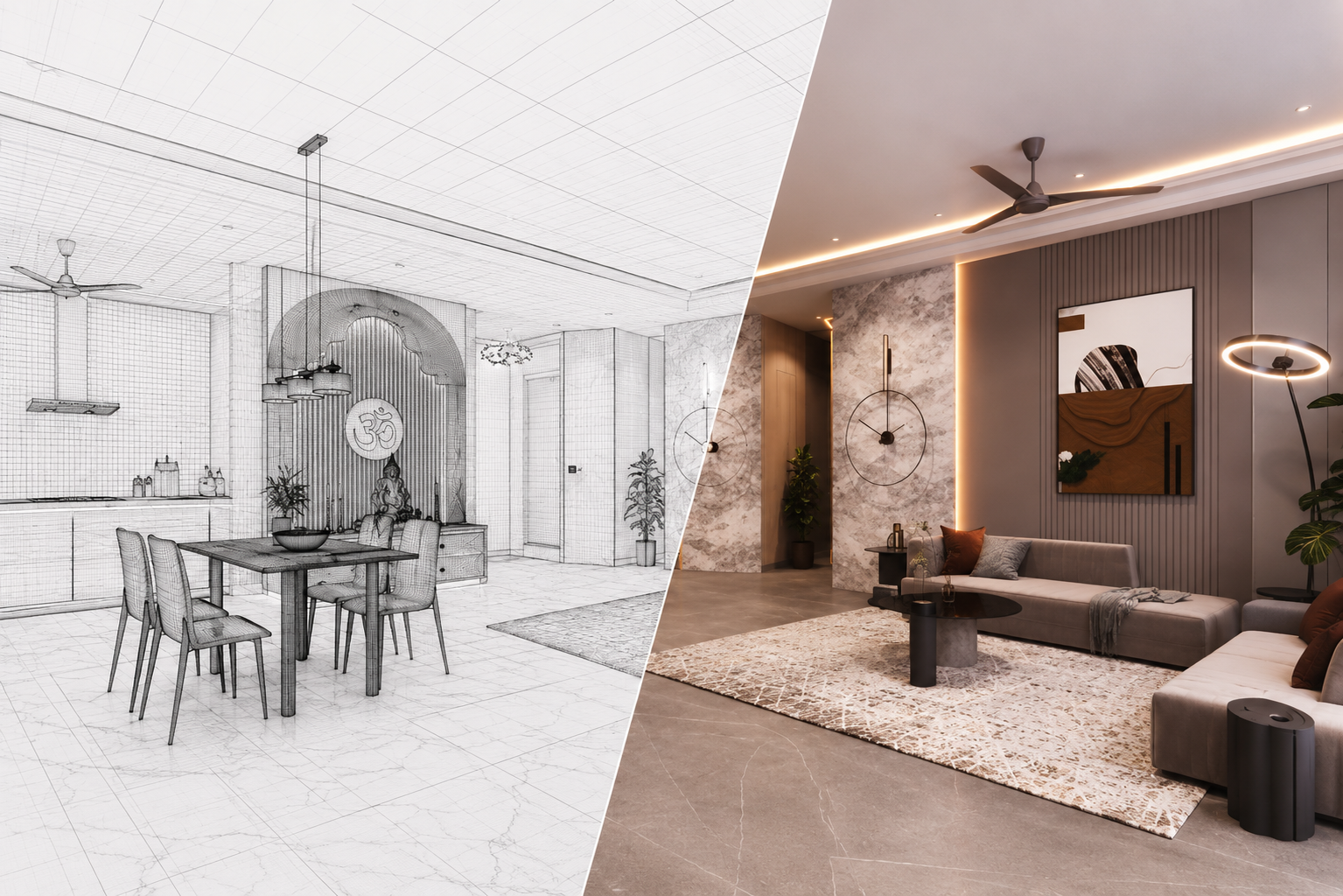
Design teams often use both, but clients experience them differently.
A render is a still frame. It focuses attention. It lets someone pause and absorb detail. Materials, lighting, proportions, all become easier to evaluate.
A walkthrough moves. It builds context. It helps someone understand flow and spatial relationships.
One is not better than the other. They solve different problems.
A common pattern in real projects is this. Renders are used to finalise key areas like living rooms or lobbies. Walkthroughs are used later to support sales or stakeholder presentations.
A mistake some teams make is using walkthroughs too early. Movement without clarity can confuse more than it helps.
The part nobody talks about, when rendering backfires
There is a tendency to push for hyper-real visuals. Perfect lighting. Perfect materials. Perfect styling.
According to CGarchitect (2023), overly polished renders can reduce buyer trust if they feel unrealistic. This shows up more often than people expect.
A client once paused on a render not because it looked bad, but because it looked too perfect. The question was simple. “Will it actually look like this?”
Moments like that reveal how buyers actually think.
Rendering works best when it balances aspiration with believability. Slight imperfections, realistic lighting, practical layouts. These build trust.
Choosing a 3D rendering agency, what actually matters
Portfolio reviews are useful, but they only show part of the picture.
The real difference shows up in how an agency understands the intent behind the design.
A technically strong render that misses the design intent creates more confusion than clarity. Materials might be correct, but the feeling is off.
When evaluating a 3d rendering agency, look for how they interpret space, not just how they execute it.
In our experience, the best collaborations happen when the agency asks questions early. Not just about dimensions or finishes, but about who the space is for and how it will be used.
That context shapes the output more than any software ever will.
Cost vs value, the question that comes up every time
The pricing conversation in India is always practical.
Rendering is often seen as an additional cost. The shift happens when it is viewed as a decision accelerator.
A delayed decision carries hidden costs. Time, coordination, missed opportunities.
A clear render reduces that delay.
Not every project needs it. Small internal changes or highly experienced clients may not require detailed visuals. This works well, but only when everyone involved already shares the same level of understanding.
For most client-facing work, especially where multiple stakeholders are involved, clarity tends to pay for itself.
What most people ask about 3D interior rendering
What’s the real difference between rendering and elevation?
Rendering is about experience, light, materials, depth. Elevation is just the outer face of a building. One helps you feel the space, the other helps you understand its structure.
Where does a walkthrough actually help?
Mostly in real estate. When buyers can’t visit the site, a walkthrough gives them a sense of movement and layout. It reduces hesitation before a physical visit.
How much does this usually cost in India?
It varies a lot. A simple render is affordable, but detailed interior or commercial work costs more. The bigger factor is revisions, not just the first output.
How do you know which agency to trust?
Look at how they think, not just what they show. A team like Lucid The Artistry usually focuses on clarity first, visuals second. That difference shows up quickly in real projects.
The decision shifts quietly when clarity improves
Projects rarely fail because the design was weak. They slow down because understanding takes time.
A well-made render changes that dynamic. Conversations become shorter. Decisions become clearer. Confidence builds faster.
A good render does not just show a space, it removes the need for explanation.
For teams working on client-facing projects, the question is less about whether to use 3d rendering services and more about when clarity becomes necessary.
